
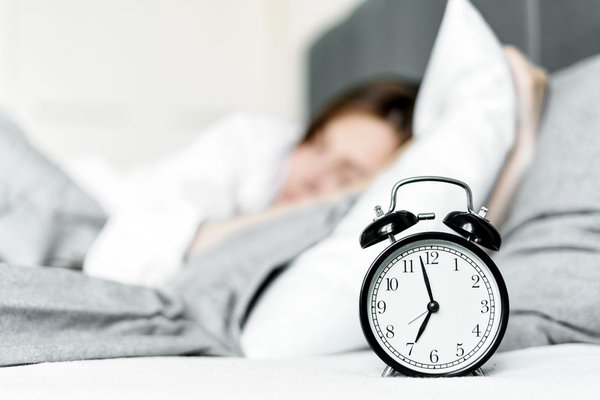
You can be exhausted at 11 p.m. and still find yourself wide awake until 2 or 3 a.m. Then, when the alarm rings at 7, getting out of bed feels almost impossible. If this happens consistently, even when you make a serious effort to sleep earlier, your body clock may be running on a later timetable.
Delayed sleep phase syndrome, now more commonly called delayed sleep-wake phase disorder, is not simply a preference for staying up. It describes a persistent mismatch between when your body naturally wants to sleep and when school, work, or daily responsibilities require you to be awake.
The clue is what happens when you control your schedule
Imagine someone who struggles to fall asleep before 2 a.m. and regularly sleeps through several morning alarms. On holiday, with no early commitments, they sleep from 2:30 a.m. to 10:30 a.m. and wake feeling reasonably refreshed. Their sleep may be adequate in length and quality; it is the timing that creates problems.
That contrast is one of the most useful clues. With delayed sleep phase syndrome, sleep often becomes more normal when a person can follow their preferred late sleep schedule. The difficulty returns when they must shift to conventional hours. Someone with insomnia, by contrast, may struggle to sleep even when their schedule allows plenty of opportunity. Not every night owl has a disorder; persistent impairment is a key distinction.
Why your internal clock stays behind
Your circadian rhythm helps coordinate alertness, sleepiness, body temperature, and hormone release across roughly 24 hours. Light is a powerful signal that helps keep this internal clock aligned with the outside world.
In delayed sleep-wake phase disorder, the biological signals for sleep arrive later than expected. You might feel relatively alert late at night, even after a tiring day, because your body has not reached its usual sleep window. Trying to force bedtime earlier does not necessarily move that window.
Genetic influences may contribute, and delayed sleep timing is particularly common during adolescence. Evening bright light, insufficient morning light, and inconsistent wake times can reinforce a body clock delay, although they do not mean someone has caused the condition.
How a delayed phase affects mornings
The most obvious symptom is trouble waking up when other people expect you to. But the consequences often build throughout the week.
If your natural sleep window runs from 2 a.m. to 10 a.m., a 6:30 a.m. alarm may cut several hours from your sleep. Repeating this can cause daytime sleepiness, poor concentration, irritability, and missed classes or appointments. Sleeping late on days off may then feel like the only chance to recover.
How to recognize a pattern worth discussing with a clinician
A few late nights after travel or deadlines do not establish a circadian rhythm disorder. A clinician looks for a sustained pattern, daily impairment, and alternative explanations.
Keep a record rather than relying on memory
For at least one to two weeks, write down when you get into bed, approximately when you fall asleep, when you wake, naps, caffeine use, and early obligations. Include workdays and free days. You may discover that sleep onset stays late even on evenings when you put your phone away and try to relax.
A sleep specialist may ask for longer tracking or use a wrist-worn activity monitor called an actigraph. A laboratory sleep study is not always necessary, but additional testing may help when symptoms suggest sleep apnea or another disorder. Tell your clinician about medications, shift work, and mood symptoms too.
Approaches that may help shift sleep earlier
Changing a delayed body clock is usually gradual. The goal is not to spend more hours lying awake in bed; it is to move the timing signals that help determine when sleepiness arrives.
Use light at the right time
Bright light after waking can help shift the circadian clock earlier. Depending on your situation, a clinician may recommend outdoor morning light or a properly timed light box. Light late in the evening tends to send the opposite signal, so reducing bright room lighting and screen exposure before your intended bedtime may help.
Timing matters. If you currently wake at 11 a.m., intense light at an arbitrarily early hour is not necessarily a sensible starting plan. Seek individualized advice, especially if you have an eye condition, bipolar disorder, or take medicines that increase light sensitivity.
Move the routine in manageable steps
Suppose you naturally sleep from 2:30 a.m. until 10:30 a.m. but need to start work earlier next month. Rather than attempting an immediate 10 p.m. bedtime, discuss a gradual schedule shift with a sleep professional. Keep wake time and light exposure aligned with that plan, including on days off, while allowing sufficient total sleep.
Regular meals, daytime movement, and limiting late caffeine can support the routine. An earlier bedtime alone, however, is unlikely to overcome a persistent circadian delay. A guide to morning light and sleep timing can explain why the clock matters more than willpower. Advice on building a consistent sleep schedule is also useful.
Ask before trying melatonin
Clinicians sometimes use carefully timed melatonin to help move sleep timing earlier. It is not simply a sleeping pill taken whenever you want to fall asleep. The useful timing and dose depend on the person, and supplement quality can vary. Discuss interactions, side effects, and suitability with a healthcare professional before using it, particularly for children or during pregnancy.
When to seek help
Consider a primary care clinician or sleep specialist if the late pattern has persisted for months, makes work or school difficult, or leaves you chronically sleep deprived. Seek prompt advice if daytime sleepiness makes driving unsafe. Treatment may combine schedule planning, appropriately timed light, and other measures tailored to your circumstances.
Frequently asked questions
Is delayed sleep phase syndrome the same as insomnia?
No. Both can involve difficulty falling asleep at a desired time, but people with a delayed phase often sleep normally when allowed to follow their natural later schedule. Insomnia can involve sleep difficulty even when the timing and opportunity are suitable.
Can you develop a delayed sleep schedule as an adult?
Yes. Although delayed sleep timing commonly emerges during adolescence, adults can experience persistent symptoms too. A clinician can assess whether a circadian disorder, lifestyle pattern, or another sleep problem best explains the change.
Will sleeping earlier for one night reset my body clock?
Usually not. One early bedtime may leave you awake for hours. Lasting change generally requires consistent timing cues over days or weeks rather than a single unusually early night.
Does melatonin fix delayed sleep phase syndrome?
Melatonin may help some people shift their circadian timing when used appropriately, but it is not a guaranteed cure. Timing, other treatments, and ongoing routines all matter.
A late clock is different from a failed bedtime
If sleep comes easily at 3 a.m. but not at 11 p.m., the problem may be less about trying harder and more about understanding when your body is ready to sleep. Track the pattern, protect adequate rest, and seek guidance before making major changes. A realistic plan addresses both the clock on the wall and the one inside you.