
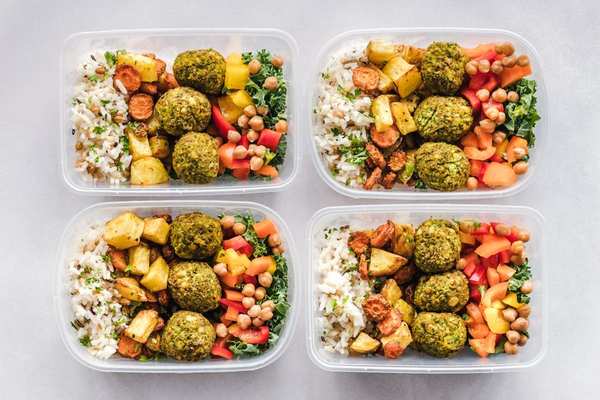
Plant-based meal prep works best when it removes decisions rather than creating a fridge full of identical meals. Instead of cooking ten complete meals on Sunday, prepare a few building blocks—grains, beans or lentils, roasted vegetables, fresh add-ons and one or two sauces—then combine them differently through the week.
This style of plant based meal planning suits busy weekdays: do the slow tasks once, keep quick ingredients ready, and assemble meals in minutes.
Start With a Weekly Meal Formula
Before shopping, choose a simple formula for the meals you want to cover. For five weekday lunches and dinners, think in components rather than ten separate recipes. A practical base looks like this:
- Two cooked grains or starchy bases, such as brown rice and quinoa
- Two plant proteins, such as lentils and chickpeas
- Three or four cooked vegetables with different textures
- Two fresh ingredients, such as spinach, herbs, cucumber or shredded cabbage
- Two sauces or dressings with contrasting flavours
This gives you enough variety without turning vegan meal prep into an all-day project. It also creates natural overlap between meals, which is where the real time savings come from.
Plan for Five Days Without Cooking Everything at Once
A split-prep system often works better than cooking everything at once. Prepare the longest-lasting components first, then schedule a small midweek refresh for delicate foods.
Your main prep session
Cook grains, lentils or beans, roast firm vegetables, wash sturdy greens, and mix sauces. Canned beans can save more time. Keep fresh herbs, avocado and crisp vegetables uncut until closer to serving when possible.
Your midweek refresh
Spend 10 to 15 minutes on Wednesday chopping fresh vegetables, cooking a quick second batch of greens, or moving frozen portions into the refrigerator to thaw safely. This small reset prevents Thursday and Friday meals from feeling like leftovers from a distant weekend.
For more ideas on balancing meals, a useful internal follow-up would be plant-based protein sources.
Batch Cook Components That Can Change Personality
The best batch cooking vegan strategy is to keep the core foods neutral enough to work in more than one cuisine. A tray of roasted peppers, courgette and onions can go into a grain bowl one day and a wrap the next. Chickpeas can become part of a Mediterranean-style lunch, then move into a curry-inspired dinner.
For example, imagine you prep quinoa, brown rice, chickpeas, lentils, roasted vegetables and a tray of baked tofu. Add a lemon-tahini sauce and a spicy tomato dressing. On Monday, quinoa, chickpeas, roasted vegetables and tahini become a bowl. On Tuesday, rice, tofu, cabbage and spicy dressing become a quick stir-fry-style plate. On Wednesday, lentils and roasted vegetables can be warmed with tomatoes and served over rice. The same prep supports different meals because the final seasoning and assembly change.
Build Meals Around Texture, Not Just Nutrition
Meal prep becomes repetitive when every container is soft, brown and reheated. Texture is an easy fix. Pair cooked foods with something crisp, fresh or creamy at serving time.
- Add shredded cabbage, cucumber or radish to soft grain bowls
- Keep toasted seeds or nuts separate until eating
- Use hummus, tahini dressing or mashed avocado for creaminess
- Add lemon juice, herbs or pickled vegetables for brightness
A guide to easy vegan sauces and dressings would pair naturally with this method because sauces are one of the fastest ways to make the same base ingredients feel different.
Use the Fridge and Freezer as Part of the Plan
If you are preparing food for the entire workweek, storage matters. The FDA advises refrigerating perishable prepared food and leftovers within two hours, keeping the refrigerator at 40°F (4°C) or below, and generally using leftovers within three to four days. That means a five-day meal plan should not automatically mean keeping every cooked component in the fridge from Sunday through Friday.
Instead, refrigerate the portions you expect to eat early in the week and freeze suitable later-week portions soon after they have cooled and been packed. Grain dishes, cooked beans, lentil stews and many roasted vegetables freeze well. Move a frozen portion to the refrigerator the night before you need it.
Use shallow, covered containers for prepared food and label them with the prep date. Sauces and crisp toppings are usually better stored separately so meals stay fresh rather than soggy.
A Simple Five-Day Assembly Plan
You do not need five complicated recipes. Use a flexible outline and adjust portions to your appetite and nutrition needs.
- Monday: quinoa, chickpeas, roasted vegetables, greens and lemon-tahini sauce
- Tuesday: brown rice, tofu, cabbage, carrots and spicy tomato dressing
- Wednesday: lentils, rice, roasted cauliflower and fresh herbs
- Thursday: thawed chickpea-and-vegetable filling in wraps with greens and sauce
- Friday: a freezer portion of lentil stew with quinoa and a fresh crunchy topping
This kind of rotation keeps plant based meal prep for the week practical because you are reusing ingredients without repeating the exact same plate. If you want to expand the system, healthy vegan lunch ideas is another natural topic to explore.
Make the Routine Easier to Repeat
Keep a short list of dependable grains, proteins, vegetables and sauces, then rotate one or two items each week. Swap quinoa for couscous, chickpeas for black beans, or tahini sauce for a herby vinaigrette.
Leave some space in the plan. If Thursday is unpredictable, freeze that meal from the start. If one dinner is likely to be eaten out, prep fewer portions. Good meal planning should respond to your schedule.
Frequently Asked Questions
How long does plant-based meal prep last in the fridge?
Many cooked leftovers are generally best used within three to four days when refrigerated promptly at 40°F (4°C) or below. For meals intended for later in the week, freezing suitable portions is a safer and often better-quality option.
What are the best plant proteins for meal prep?
Beans, lentils, chickpeas, tofu and other soy foods are versatile choices. Nuts and seeds can also add protein and texture, especially as toppings. Choose a few options you enjoy and rotate them rather than relying on one protein every day.
How do I stop vegan meal prep from getting boring?
Prepare flexible components instead of complete identical meals. Change sauces, fresh toppings, herbs, spices and serving formats. A batch of chickpeas can become a bowl, wrap or warm stew depending on what you add.
Do I need to meal prep every meal for the week?
No. Preparing only the meals that usually cause stress—such as weekday lunches and two or three dinners—can be enough. Partial prep is often easier to maintain than trying to plan every breakfast, lunch, dinner and snack.
A Week of Meals Without a Week of Repetition
Plant-based meal prep is most useful when it creates options. Cook a small set of versatile components, store them safely, keep fresh toppings separate, and use sauces to shift the flavour from one meal to the next. With a main prep session and a brief midweek refresh, you can cover a busy workweek without spending every evening cooking from scratch—or eating the same bowl five days in a row.