
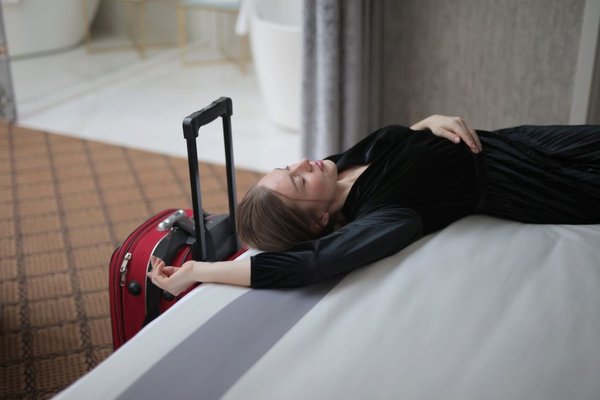
You land after a long flight, check the local clock, and discover that your body strongly disagrees with it. Dinner feels like breakfast. You wake at 3 a.m. ready to start the day, then struggle to concentrate by lunchtime. Jet lag recovery is less about forcing sleep and more about helping your internal clock catch up with a new time zone.
A realistic plan combines appropriately timed light, steady local sleep hours, sensible naps, and patience.
Why crossing time zones disrupts sleep
Your circadian rhythm is an approximately 24-hour timing system that regulates sleepiness, alertness, body temperature, and other daily functions. It responds especially strongly to light and darkness. When a flight moves you rapidly across several time zones, your phone changes immediately; your biological clock does not.
That mismatch explains why jet lag can involve more than insomnia. Daytime fatigue, poor concentration, digestive discomfort, and waking too early are common. Travel tiredness from an uncomfortable flight may overlap with jet lag, but only the time-zone mismatch requires circadian adjustment.
Start adjusting before departure
If your trip is long enough to justify switching to local time, begin a few days ahead. For eastward travel, which usually requires an earlier sleep schedule, try moving bedtime and waking time 30–60 minutes earlier each day. For westward travel, shift them later where practical. Gradual changes are easier than an all-night attempt to reset yourself.
Protect your sleep before flying. Starting a journey sleep-deprived makes fatigue harder to handle, even with a healthy body clock. Learning about consistent sleep schedules can also help you plan the shift.
Use the flight to support destination time
Set a watch to your destination’s time zone after boarding. This helps you decide when to rest, eat, or stay awake. If your flight overlaps with nighttime at your destination, an eye mask and earplugs may make sleep easier. If it is local daytime, avoid trying to sleep through the entire journey.
Drink water regularly and limit excess alcohol. Walk and stretch when safe. These steps support comfort, although hydration alone will not reset the circadian clock. Avoid treating caffeine as a substitute for sleep.
Make the first day a gentle reset
Anchor your schedule to local time
After arrival, plan meals and a reasonable bedtime around the new location. Try to wake at a consistent local hour, even if the first night is imperfect. Approaching a normal bedtime is usually better than collapsing into a long afternoon sleep that leaves you wide awake overnight.
Give yourself a lighter first-day schedule if possible. A walk, a simple meal, and time to unpack are more manageable than demanding meetings after a sleepless flight.
Get light at the right time, not simply more light
Light is the most powerful signal for shifting the body clock, but timing matters. Light received after your body’s biological low point tends to move the clock earlier; light in the biological evening tends to move it later. Eastward and westward journeys can therefore require different strategies.
For modest eastward shifts, appropriately timed morning light often helps. Westward adjustments commonly benefit from later-day light. After a very large time-zone jump, however, early local morning may still be the wrong biological time for bright light. A reputable jet lag calculator or sleep specialist can help identify suitable exposure and avoidance periods.
As bedtime approaches, dim bright indoor lights and reduce stimulating screen use. Understanding how light affects your circadian rhythm explains why sunshine at the wrong time may complicate an adjustment.
Handle naps, caffeine, and activity strategically
A short nap can help if you are struggling to function, but keep it around 20–30 minutes and well before local bedtime. Long or late naps reduce the sleep pressure you need at night. If you feel dangerously sleepy, especially before driving, prioritize safety over a rigid schedule.
Use caffeine, if you tolerate it, early enough that it will not interfere with nighttime sleep. Its effects can last for hours. Gentle movement and outdoor walking can support alertness. Regular local mealtimes provide another useful routine, although eating at a certain hour is not a replacement for well-timed light.
A practical example: arriving six hours ahead
Imagine flying from Chicago to London at a time of year when London is six hours ahead. You land in the morning after limited overnight sleep and feel tempted to spend the afternoon in bed. Instead, eat at an appropriate local hour, take a short rest only if needed, and aim for a realistic London bedtime.
Because your internal clock may still be on Chicago time, seek itinerary-specific guidance about bright light rather than assuming immediate dawn exposure is always ideal. Keep the evening calm and set a consistent wake-up time the next morning. The goal is steady progress, not perfect travel sleep on night one.
Should you use melatonin for jet lag?
Melatonin may help some travelers, but it is a timing tool, not a guaranteed sleeping pill. Taking it at the wrong biological time can shift your clock in an unhelpful direction. Health authorities differ in their recommendations, and supplement quality and availability vary between countries.
Ask a clinician or pharmacist before using it, particularly if you take other medicines, are pregnant, or have a medical condition. Avoid self-prescribing sedatives or combining sleep aids with alcohol. Good sleep hygiene habits remain helpful once your clock has adjusted.
Frequently asked questions
How long does jet lag recovery usually take?
Many people improve within a few days, but recovery varies with the number of zones crossed, direction of travel, sleep debt, and individual biology. Larger shifts generally require more adjustment. The familiar one-day-per-time-zone rule is not a precise prediction.
Is jet lag worse when traveling east or west?
Eastward travel is often harder because it usually requires advancing the body clock, or falling asleep earlier. Westward travel more often requires staying awake later. Your habitual sleep timing also matters.
Can I reset my body clock in one night?
One good night can reduce sleep debt, but rarely eliminates a substantial circadian mismatch. Consistent local timing and correctly scheduled light exposure are more useful than forcing a sudden reset.
What if I am only away for two days?
For a very short visit, maintaining parts of your home schedule may be more practical than fully adapting and reversing the change on returning. Balance that choice against local commitments and the need to remain alert.
Give your body clock time to catch up
The most useful jet lag tips are realistic: prepare where possible, follow a stable destination schedule, time light carefully, and avoid turning naps or caffeine into another sleep problem. If symptoms remain severe or persist well beyond your trip, speak with a healthcare professional. With deliberate choices, time zone sleep disruption can become a manageable part of travel.