
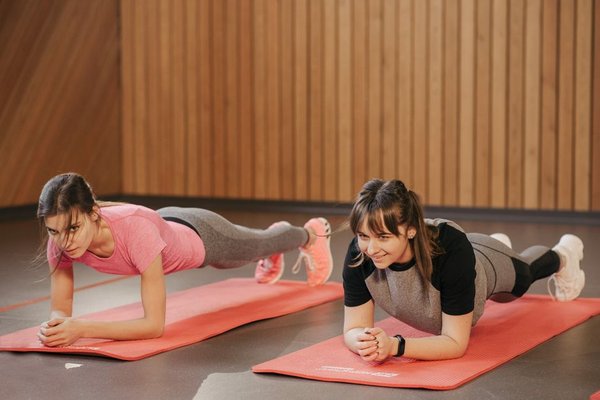
A strong core is useful long before you can hold a plank for a minute. It helps you stay steady when you reach into a cupboard, carry shopping, or get up from the floor. Yet many beginner routines jump straight to dozens of crunches, as though the only goal is tired abdominal muscles.
A better core workout for beginners teaches you to control your trunk while your arms and legs move. You can start on a mat at home, take short breaks, and make exercises harder only when the movement feels steady. No equipment or marathon workout is required.
Train your core to resist movement, not just create it
Your core includes muscles around your abdomen, sides, back, and pelvis. Some help you bend or twist; others keep your torso stable. That is why a balanced routine uses more than an ab-burning exercise. It asks you to resist arching, twisting, or tipping sideways while breathing normally.
Think about picking up a laundry basket. Your legs and hips do much of the lifting, but your trunk helps you stay steady. A core stability workout develops that kind of control. The aim is not to keep your stomach clenched all day.
Start with a simple control check
Lie on your back with knees bent and feet on the floor. Breathe in gently, then exhale and lightly tighten your midsection as though preparing for a small nudge. Keep your jaw and shoulders relaxed. Take another breath without losing that gentle firmness.
Try five slow breaths. If you hold your breath or press hard into the floor, ease off. This is preparation, not a maximum-effort exercise. For a longer lead-in, a guide to gentle warm-up exercises can help you settle into movement.
Five beginner core exercises worth learning
Dead bug: keep the torso quiet
Lie on your back with arms reaching upward and hips and knees bent. Exhale, then slowly lower one heel toward the floor while keeping ribs and pelvis steady. Return and alternate legs. Once that feels manageable, reach the opposite arm overhead as the heel lowers.
Begin with six controlled repetitions per side. Lower only as far as you can without your back arching noticeably or your body rocking. Keep one foot down between repetitions if needed. This is a useful alternative to a fast-paced ab workout for beginners.
Bird dog: resist twisting
Come onto hands and knees, with hands under shoulders and knees under hips. Reach one leg straight back, keeping both hip bones facing the floor. If you can hold still, extend the opposite arm forward. Pause for two seconds, then switch sides.
Try five repetitions per side. Imagine balancing a cup of water across your lower back: you want minimal shifting, not the biggest possible reach. If your wrists feel uncomfortable, practise just the leg extension.
Glute bridge: connect hips and trunk
Lie with knees bent, feet hip-width apart, and arms beside you. Exhale as you press through your feet and lift your hips until shoulders, hips, and knees form a comfortable line. Pause, then lower slowly. Start with eight repetitions.
The bridge trains your glutes alongside muscles that steady your pelvis. Avoid pushing your ribs upward or arching your back to lift higher. A modest lift with steady breathing is more useful.
Modified side plank: build side-to-side control
Lie on one side with knees bent and forearm on the floor, elbow below shoulder. Lift your hips so shoulders, hips, and knees form a line. Hold for ten to fifteen seconds, lower, and repeat on the other side.
Keep your shoulder comfortable and neck long. If you cannot hold without collapsing, shorten the effort. This exercise trains the side of your trunk, which gets missed when beginner core exercises focus only on forward bending.
Incline plank: practise whole-body tension
Place your hands on a sturdy kitchen counter or stable raised surface. Walk your feet back until your body forms a straight diagonal line. Gently brace, breathe, and hold for fifteen to twenty seconds. Avoid letting your hips sag.
The higher your hands, the easier the plank generally feels. Progress to a lower stable surface later, rather than forcing a long floor plank immediately.
A practical 15-minute home core routine
Use the first two minutes to walk around, loosen your shoulders, and practise the breathing check. Then perform one round of dead bugs, bird dogs, bridges, modified side planks, and incline planks in that order. Rest twenty to forty seconds between movements, or longer if needed. Repeat the round if your form remains solid.
For example, if you work at a desk and have fifteen minutes before dinner, do one controlled round rather than fifty rushed crunches. Note whether you kept your hips level during bird dogs and breathed during side planks. Those observations matter more than next-day soreness.
Try this home core routine two or three nonconsecutive days a week, adjusting for your fitness and other training. Combine it with walking and broader strength work rather than treating it as a complete programme. A beginner full-body workout plan is a natural next step.
How to make progress without losing control
For the first week or two, aim for smooth repetitions and steady breathing. When a move feels comfortable across two sessions, change one thing: add two repetitions, extend a hold by five seconds, or make the variation slightly harder. There is no prize for progressing every workout.
Warning signs of rushing include your back arching during dead bugs, hips rotating during bird dogs, or breath-holding during planks. Reduce the range, shorten the set, or rest. Mild effort is expected; sharp pain, dizziness, or worsening symptoms mean you should stop. If you have an injury, recent surgery, or persistent back pain, seek individual guidance before starting.
Consistency matters more than novelty. An exercise habit for beginners guide can help you fit short sessions into a busy week.
Frequently asked questions
How long should a beginner core workout be?
About ten to fifteen minutes can be plenty at first. Choose a few movements you can perform carefully rather than adding exercises to fill time. Stop when your technique deteriorates.
Are crunches necessary for a strong core?
No. Crunches train trunk flexion, but they do not cover every job your core performs. Dead bugs, bird dogs, side planks, and bridges offer a more varied foundation.
Should I train my core every day?
You do not need daily hard sessions. Starting with two or three sessions on separate days allows time to recover and practise other activities. Gentle movement can continue between workouts.
When will I notice improvement?
You may first notice steadier movement or an easier time maintaining a position while breathing. The timeline depends on your starting point and consistency. Measure progress by control, not by expecting visible abs after a set number of days.
Build the skill before the difficulty
A beginner-friendly core routine should leave you able to practise again. Start with manageable ranges, train the front and sides of your trunk, and keep breathing. Better control comes from repeating good movements and progressing gradually, not from chasing harder crunches.